

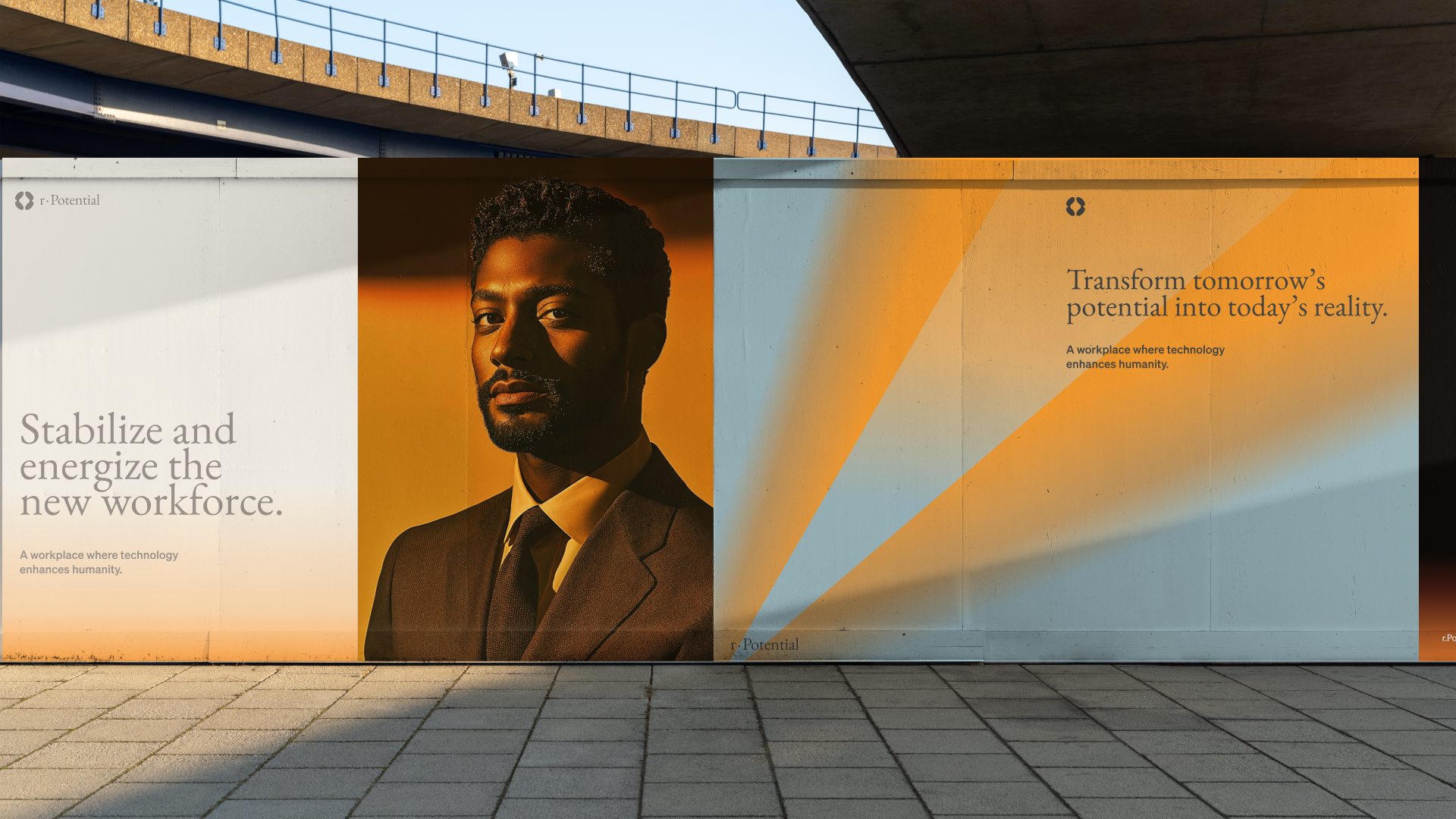
r.Potential — Designing an AI decision-intelligence platform for executive clarity
Areas
Enterprise AI
Decision Intelligence
B2B SaaS
Overview
r.Potential is an AI decision-intelligence platform for CEOs, designed to turn live market and industry information into clearer workforce decisions.
Through TinyWins, I worked within a three-designer product team over roughly six months, contributing from early discovery through Version 3 across concept studies, user flows, onboarding, high-fidelity UI, design-system foundations, and a working interactive prototype.
Role
Product Designer
Scope
Product exploration · Information architecture · User flows · UX/UI · Onboarding · Design-system foundations · Interactive prototyping
Gallery
A selection of deliverables created for Fin X, including the product presentation, interface foundations, desktop workflows, mobile views, and interactive prototype.
1 - Making AI intelligence useful to executives
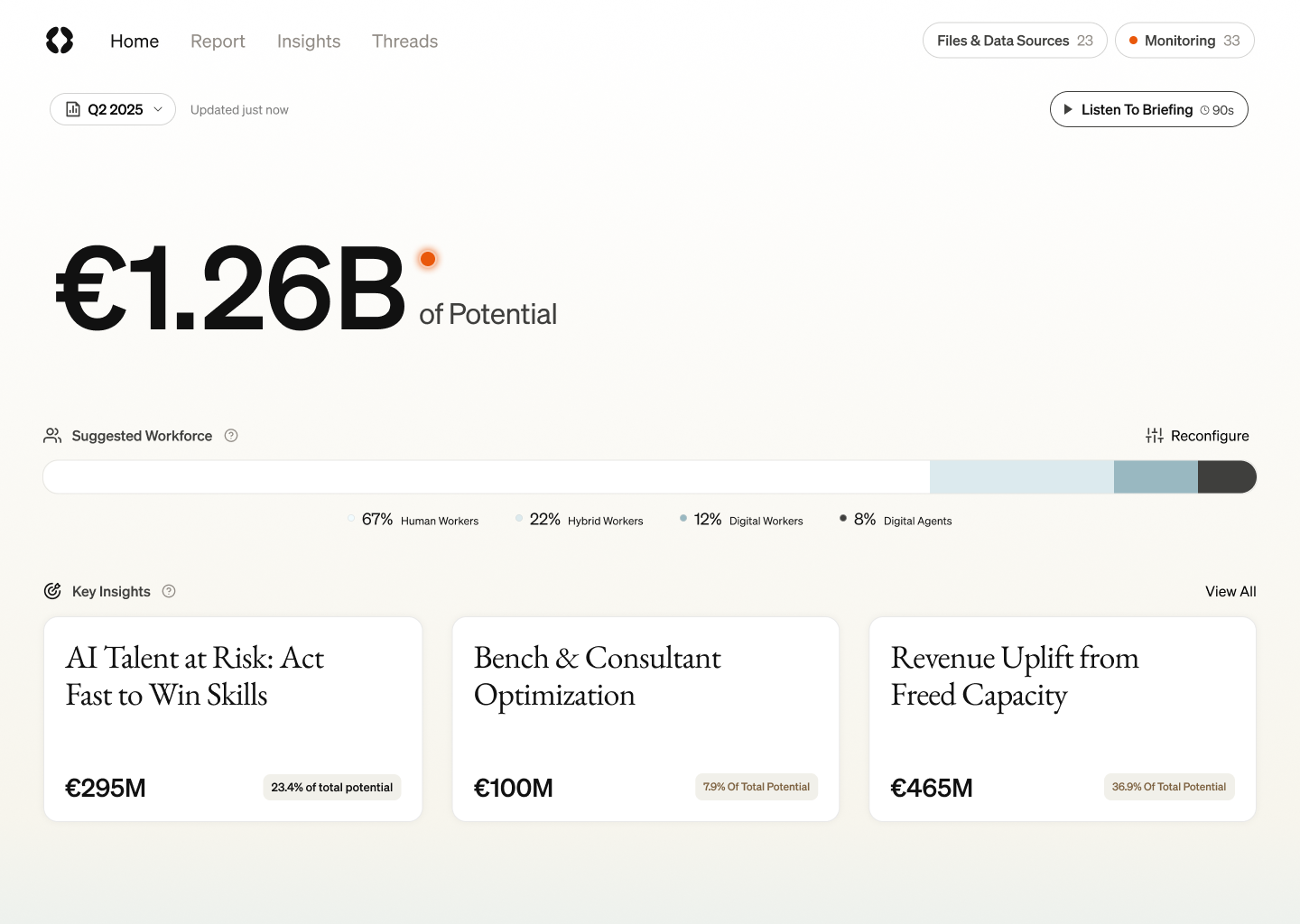
r.Potential executive dashboard showing total potential, workforce composition, and key AI-generated insights.
The core challenge was not giving leaders more information. It was helping them understand what mattered, why it mattered, and what they could do next without asking them to become analysts.
The experience had to balance depth with executive simplicity. AI-generated recommendations needed enough context, assumptions, and source visibility to feel credible, while still remaining fast to scan and easy to act on.
2 - From an abstract concept to a decision system
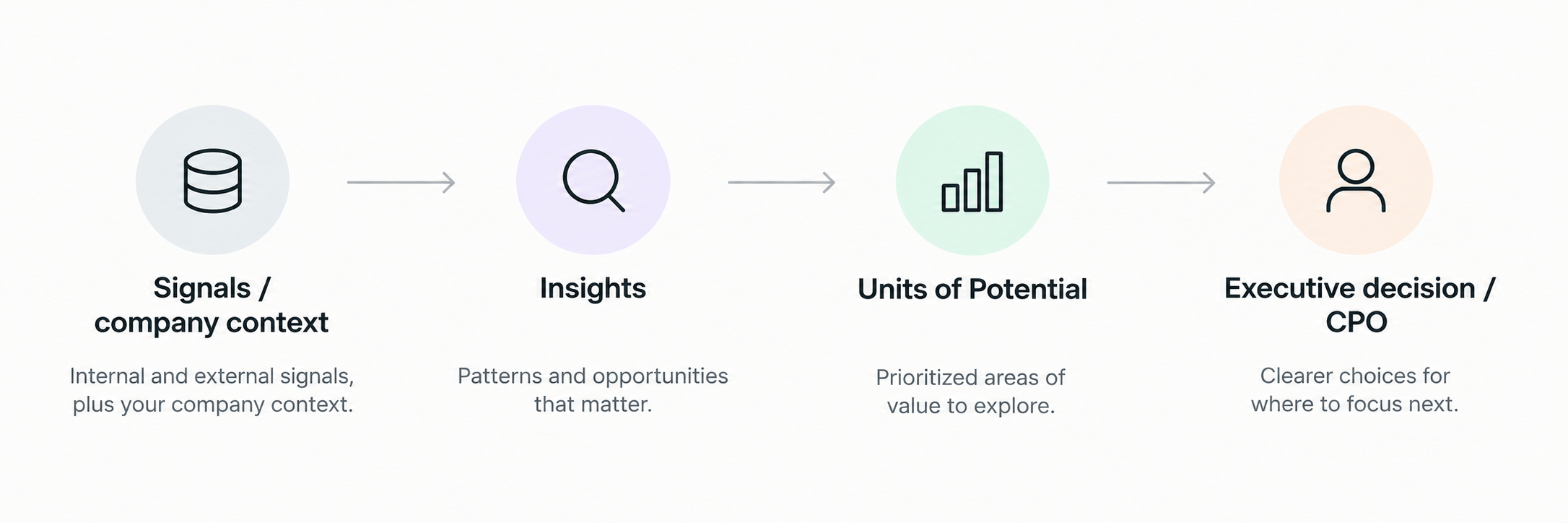
Early in the engagement, the product's core interaction model was still taking shape. We explored dashboard-driven, conversational, and more spatial approaches while defining how the platform's core concepts should relate to one another.
The product gradually converged around a clearer chain: market and company signals become Insights, Insights reveal strategic opportunities, and those opportunities connect to Units of Potential — workforce configurations that executives can investigate, discuss, and reconfigure.
3 - Finding the right executive homepage
I used rapid interface studies to test hierarchy, navigation, and different ways of making the platform's intelligence understandable at a glance. The homepage evolved away from a conventional analytics dashboard toward a decision surface centered on potential, workforce composition, and a small number of high-value Insights.
These explorations helped us test what deserved to be visible immediately and what should stay one layer deeper.
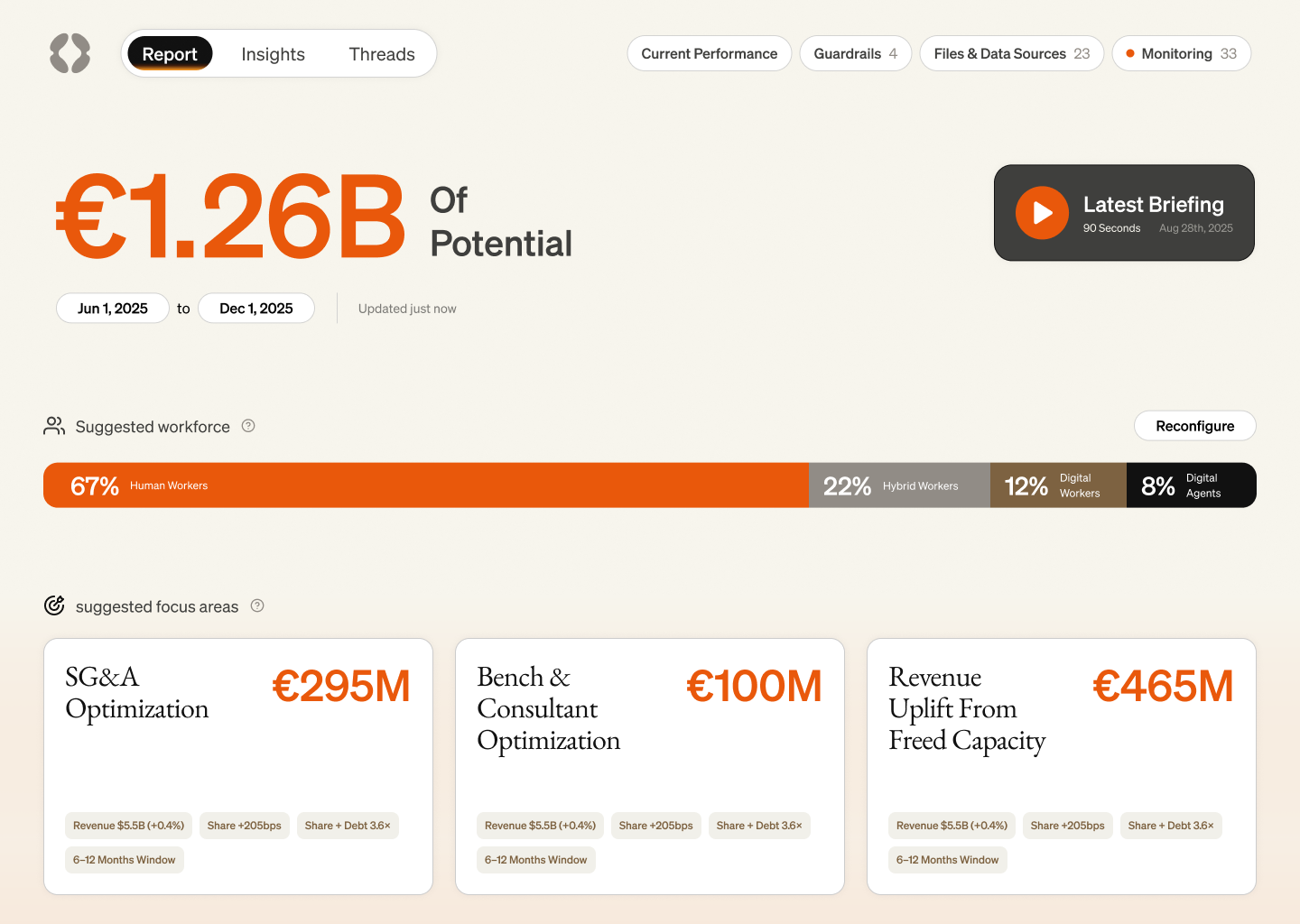
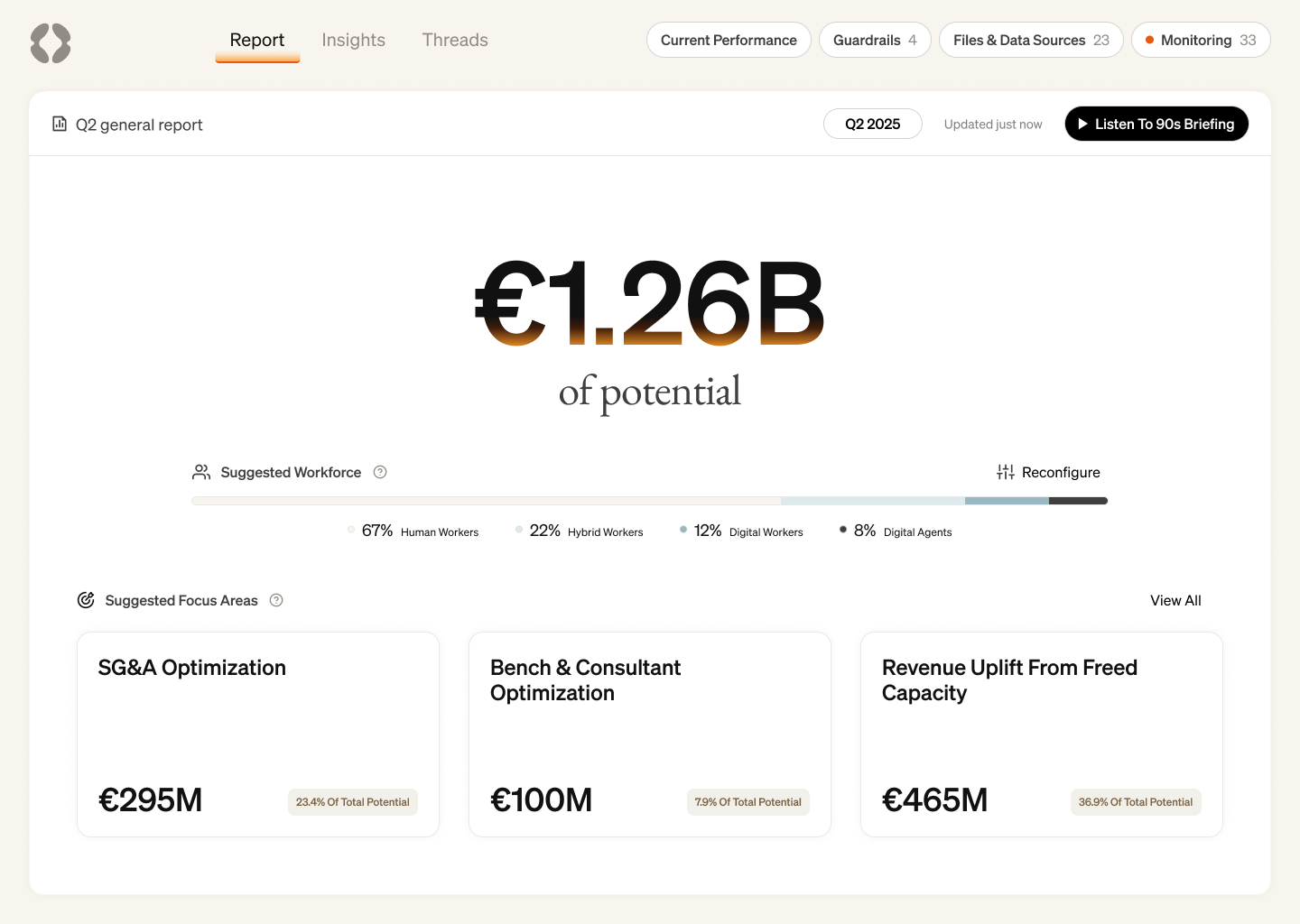
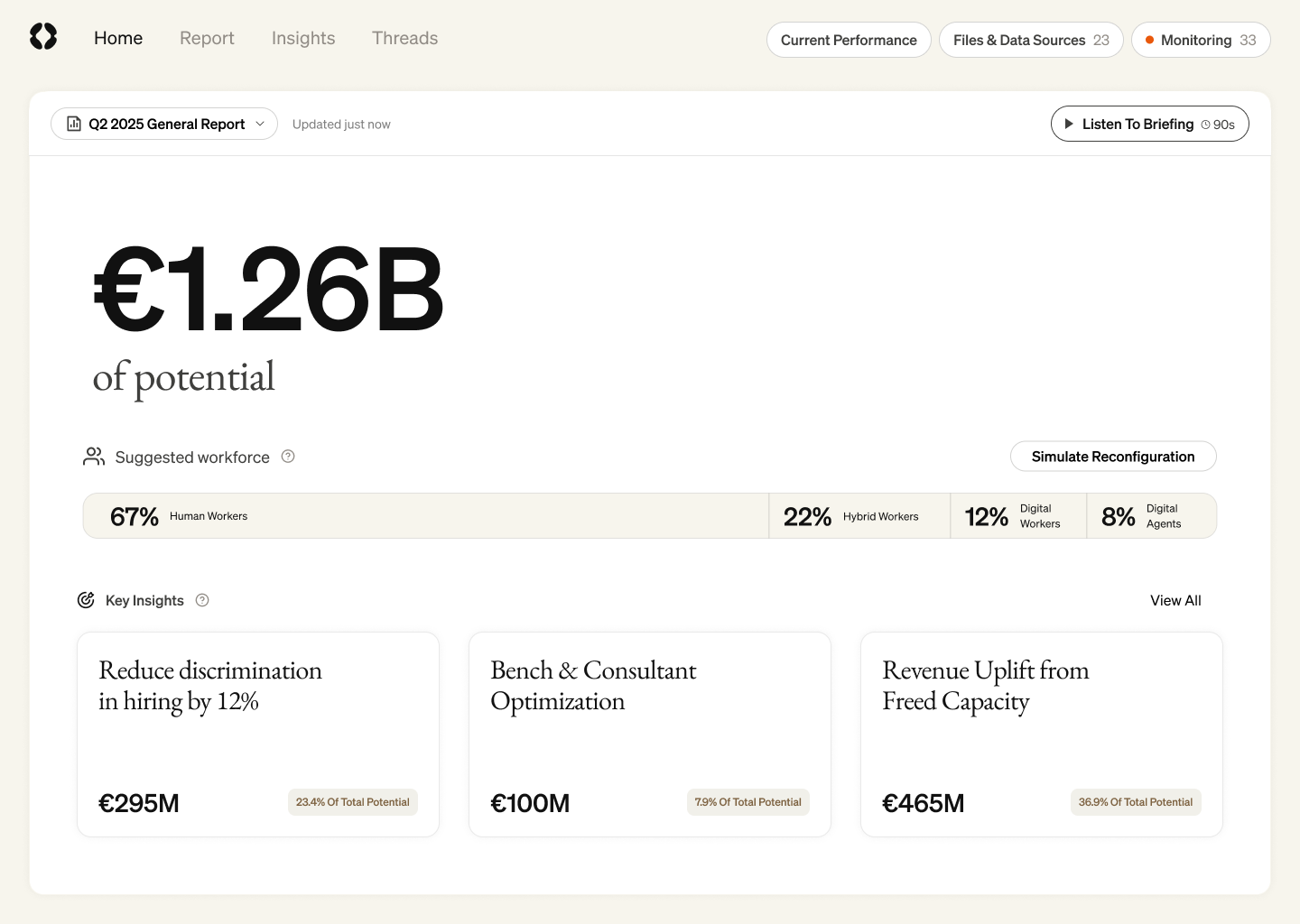
Homepage explorations moving from broad information display toward a clearer executive decision surface.
4 - Turning information into something executives could act on
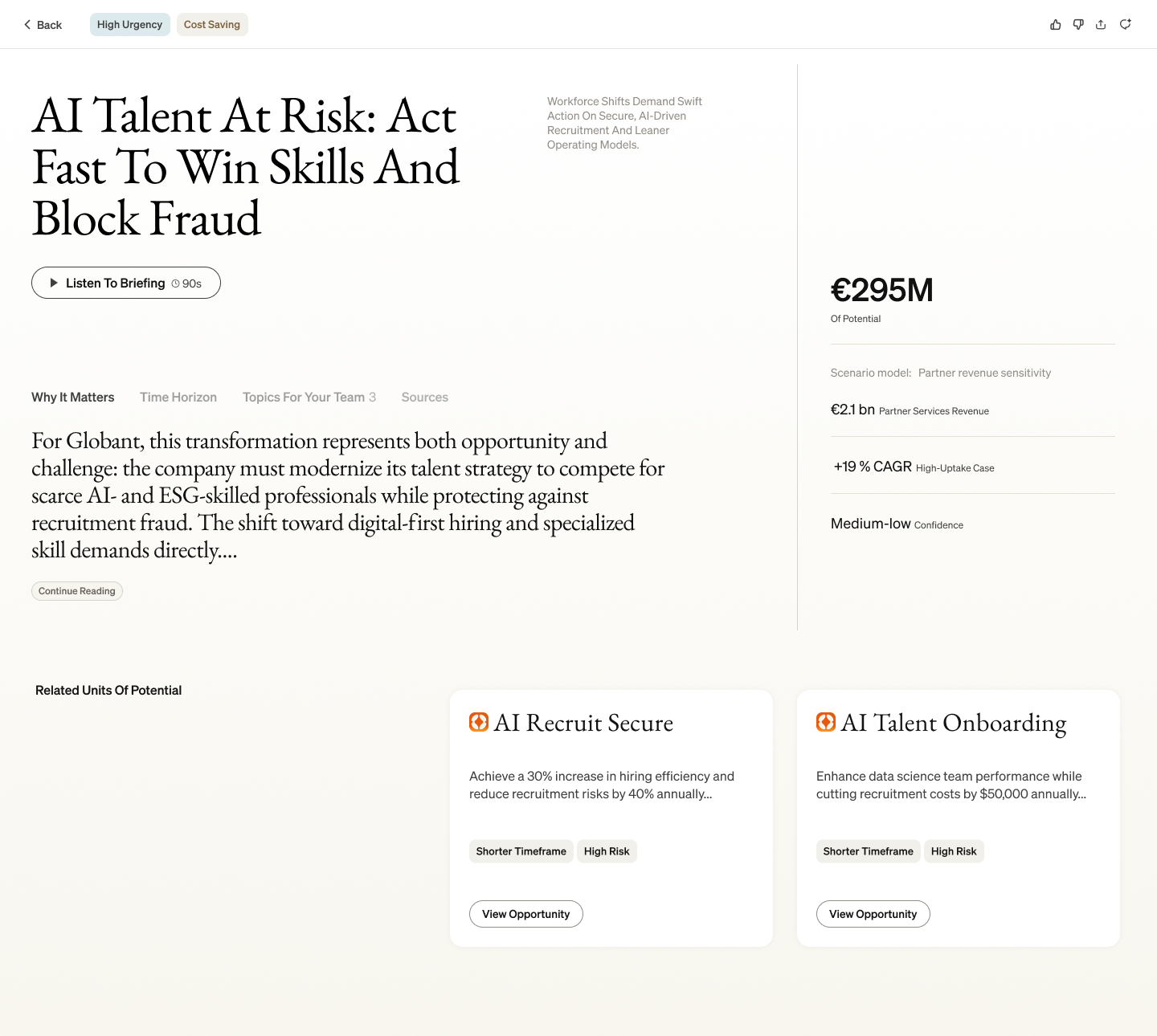
Insights became the bridge between raw intelligence and executive action. Instead of presenting isolated data points, each Insight needed to explain the strategic implication, quantify the potential opportunity, expose its sources, and lead naturally into the workforce opportunities connected to it.
We iterated heavily on information density and progressive disclosure so a leader could understand the headline first, then move deeper into assumptions, time horizon, sources, and related Units of Potential only when needed.
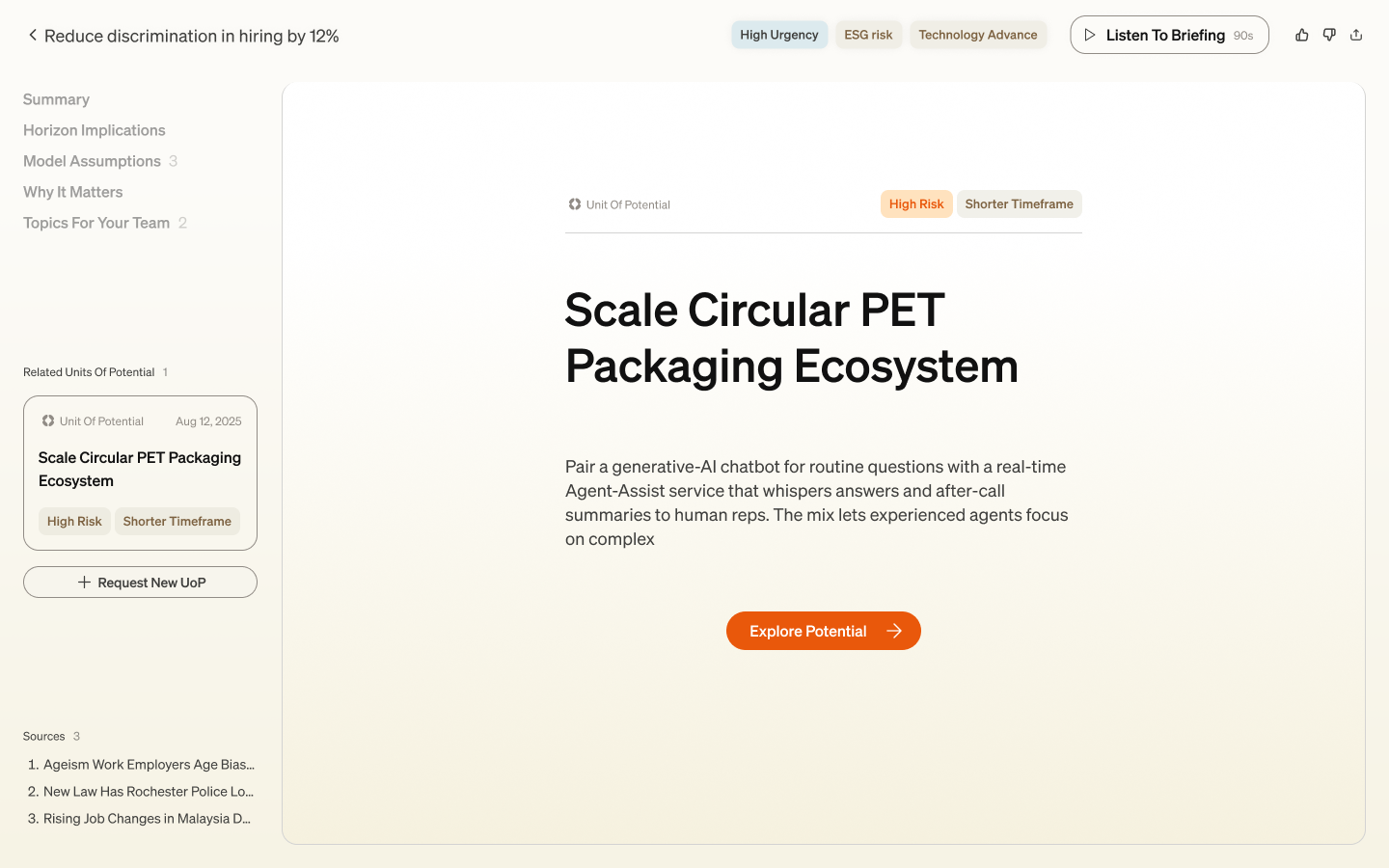
5 - Modeling the future workforce
The platform's core concept was the Unit of Potential: a proposed workforce configuration combining human and digital labor around a specific business outcome.
Designing it meant going beyond an AI recommendation. Executives needed to understand the proposed workforce mix, timeline, risks, assumptions, and success criteria — while still being able to grasp the opportunity quickly enough to support a strategic conversation.
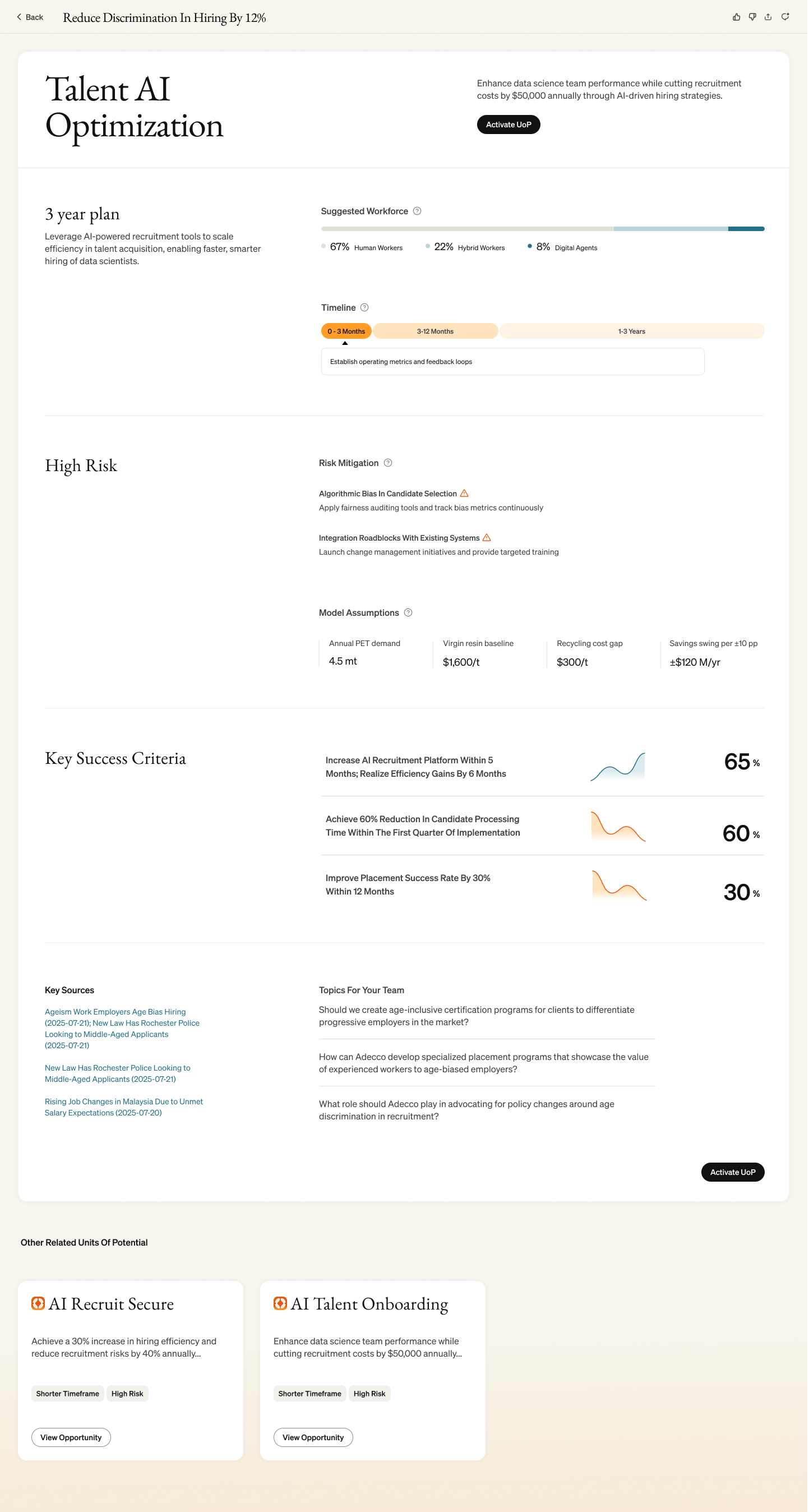
A Unit of Potential turns an AI-generated opportunity into an inspectable workforce model with composition, timeline, risks, assumptions, success criteria, and sources.
6 - From recommendation to exploration
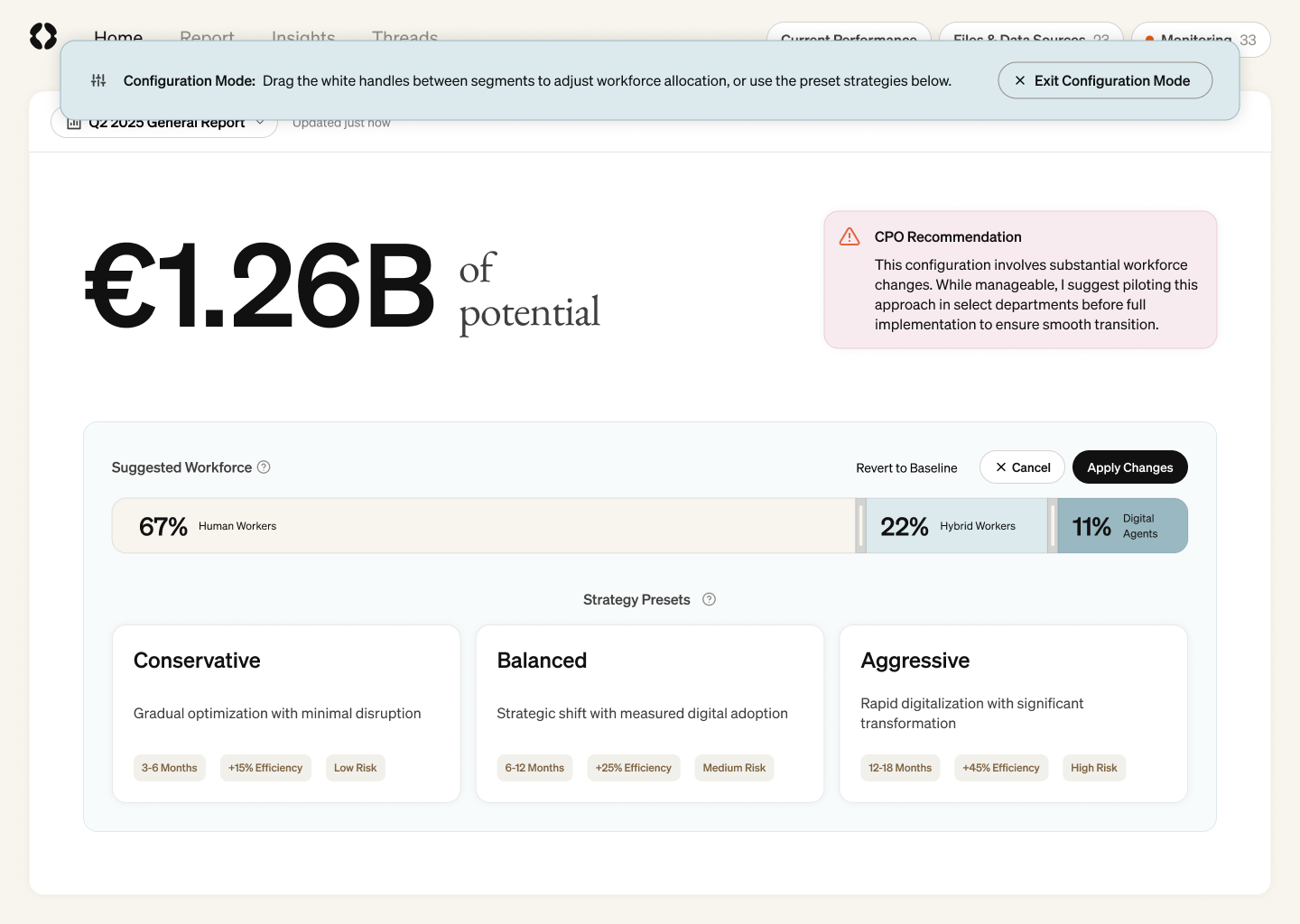
We also explored how r.Potential could move from recommendation to simulation. Configuration mode let executives adjust the balance between human, hybrid, and digital labor and compare different strategic approaches.
The goal was not to turn leaders into workforce planners. It was to make the trade-offs behind a recommendation visible enough to support a better decision and a more informed conversation with the AI advisor.
7 - Iterating with product and engineering
The product evolved through frequent working sessions with the r.Potential team and continuous feedback from engineering. I worked directly with the client product team in three sessions per week while our three-designer TinyWins team delivered weekly iterations.
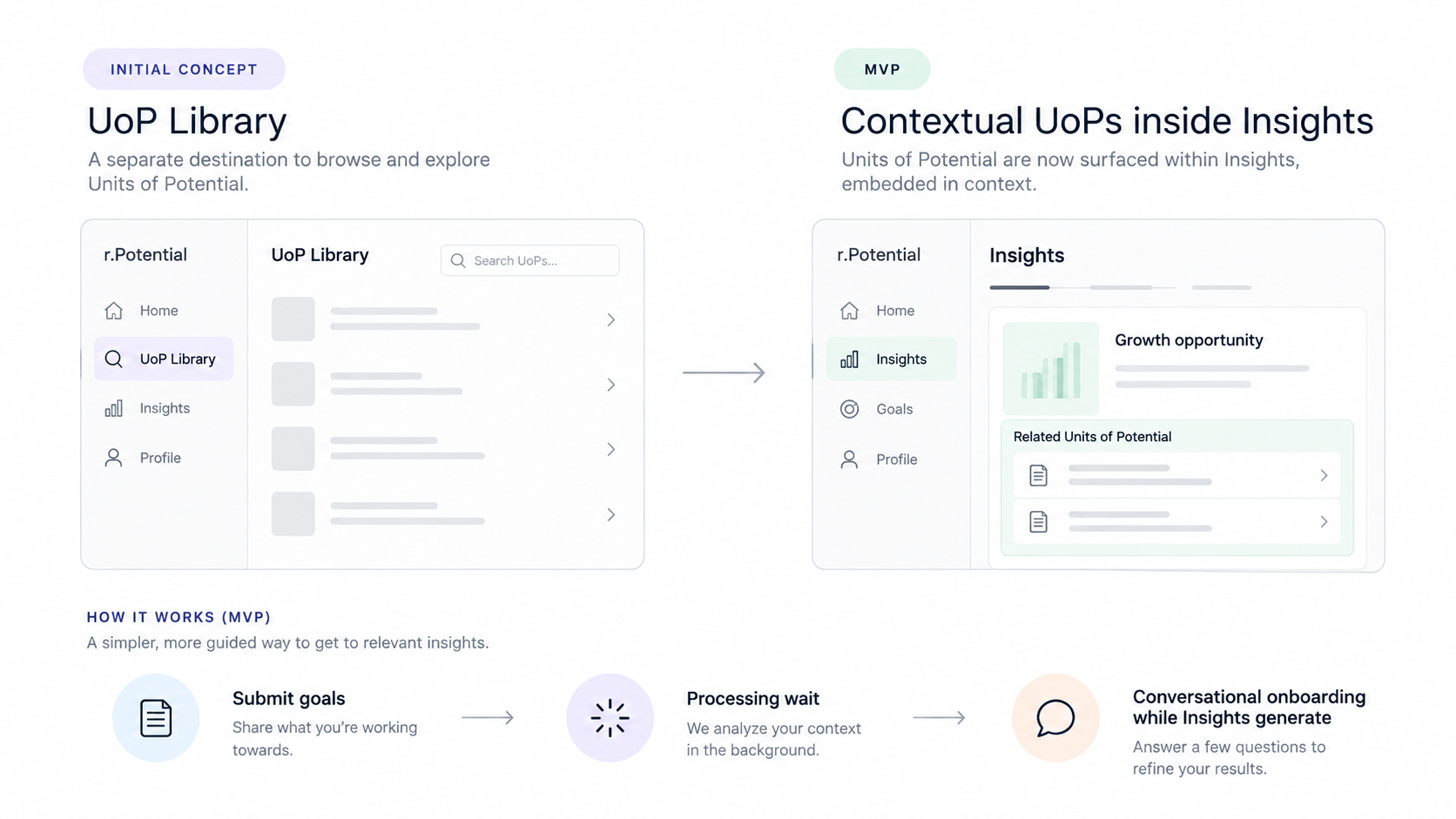
Several ideas changed once we tested them against MVP constraints. In one working session, the proposed UoP Library was put on hold after product and engineering questioned its value for the first release. We also moved toward a more conversational onboarding experience after learning that the system could take roughly 30 minutes to process a company's initial goals and begin generating its first Insights.
8 - Bringing the system together
Across the engagement, the experience moved from early product studies through multiple interface directions and into a working interactive prototype. The prototype connected the platform's key concepts into a coherent flow: understand what is changing, inspect the strategic implication, explore a Unit of Potential, and continue the decision through AI-assisted conversation.
For me, the value of the prototype was not just demonstrating the interface. It gave the team something concrete enough to react to while the product itself was still being defined.
9 - From concept to a coherent product system
Over roughly six months, our team helped move r.Potential from early discovery through Version 3 and a functioning interactive experience. The work spanned product concepts, information architecture, onboarding, high-fidelity UI, system foundations, and continuous iteration with product and engineering.
The most valuable part of the project was designing while the product itself was still being defined. Interface exploration became a way to test the product model — helping turn abstract ideas around executive AI, Insights, and future workforce configurations into something people could actually see, discuss, and refine.